
Where Have All the Leftist Conspiracies Gone?
Why the Right has been better at plotting from the shadows, and why that's a problem for the modern Left
It has by now become all too clear - as if it wasn’t already – that right-wingers on both sides of the Atlantic have been playing a blinder of a long game over the past decade or two.
Over in the increasingly dystopian-looking ‘land of the free,’ Trump won an unexpected election victory in 2017 and enjoyed a disruptive but hardly world-shattering four years as president, before suffering a decisive electoral loss in 2020. But Trump and his cronies kept the old MAGA flame burning with the help of Fox News and the occasional armed uprising, while finding powerful new allies among Silicon Valley’s conveniently super-wealthy techno-fascists and, erm, cringey alt-right grifters like J.D. Vance.
Together with opportunistic law-suits and the transformation of the supreme court into a conservative powerhouse, the conspiratorial thinking and long-term strategising of the Trump 2.0 team (as expressed in the various sinister political ‘projects’ now doing the rounds, often with year numbers attached just to ram home the message), helped them to win a far more significant victory in 2024, which they’re now using to try to completely transform US politics, society, and large swathes of the rest of the world besides.
Meanwhile, across the water in the UK, a newly-founded far-right political party run by a smarmy used-car salesman lookalike called Nigel Farage is suddenly polling better than the ruling Labour party. This would appear to be a dramatic turn of events, of course, but is perhaps actually not so surprising when you remember that Farage has been at it since 1993, during which time he’s already managed to reshape the UK’s venerable right-wing establishment Conservative Party from without and created the conditions for bloody Brexit. This is, even if it pains me to admit it, quite the long game.
And just wait ‘til you see what’s been going down in mainland Europe, where a literal dynasty has run France’s far-right party since 1972 and now find themselves on the cusp of a national election victory; and hell, when you think about it, Elon Musk’s favourite German neofascist party, the AfD, have roots that go all the way back to the actual fucking Nazis!
As Guy Debord rather astutely observed all the way back in 1988,
“Formerly one only conspired against an established order. Today, conspiring in its favour is a new and flourishing profession. Under spectacular domination people conspire to maintain it, and to guarantee what it alone would call its well-being. This conspiracy is a part of its very functioning.”1
It’s rather ironic, then, that these long-game-playing, semi-conspiratorial far-right forces all claim that the world is actually controlled by a deep-rooted and dastardly left-wing conspiracy. You know, the one that’s using DEI hires and trans people to turn all the kids gay, outbreed white people and limit the speed of everyone’s cars to 15 mph.
Out here in the real world, though, the modern left seems to come up completely short on this front. Where are our conspiratorial movements? Is there really no-one out there plotting on my behalf?
Well, I guess it’s entirely possible that I just haven’t been let in on all of the actual leftists conspiracies bubbling away out there. But if I’m right, and we really are all living through a historical moment in which - at least in ‘the West’ - the left has completely abandoned conspiracy as an organising principle, then this fact is all the more surprising - and annoying - given that conspiracies have been the beating heart of so many of the left’s most iconic movements over the past two centuries.
These have ranged from the notorious but less-than-stunningly-successful conspiratorial anarchism of Mikhail Bakunin, who was was all about the power of the plot; to Vladmir Lenin’s triumphant ‘vanguard’ theory of revolution, in which a tightly-knit crew of highly-disciplined men and women built a wider movement that eventually brought down the Tsars and landed the Bolsheviks with control of entire former Russian Empire.
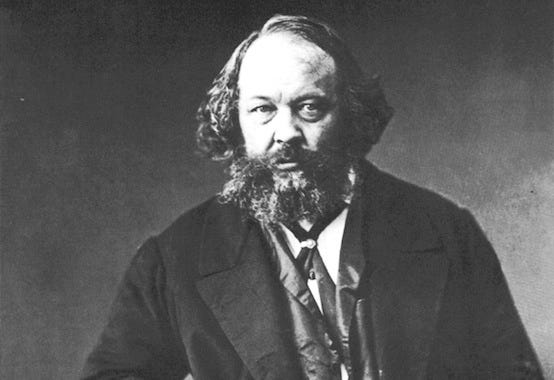
Indeed, most of the genuinely successful leftwing political movements of twentieth century - from Mao’s Chinese Communist Party, to Fidel Castro’s 26th of July Movement, to the Sandinistas in Nicaragua, and even (depending on one’s definition of ‘success’) the Zapatista rebels of southern Mexico - have been based, at least in part, on shadowy networks of plotters who worked hard over many years (if not multiple decades) to create the conditions for leftwing revolutionary victories in the face of concerted and often extremely violent repression.
Such processes were, inherently, all about playing the long game, and involved many (often literal) dead ends, political and military setbacks, leadership changes (or decapitations), and long marches into the wilderness to rebuild in the wake of severe defeats.
But the last leftists who seem to be really pushing for any of this kind of thing seem to be the kind of grey-haired trotskyists you see earnestly flyering anti-war demos and vigorously debating points of order from the back of trade union meetings. To be blunt, it’s just not very sexy - and any good conspiracy should be at least a bit sexy, right?
So, as the title of this post suggests, I’m here to argue that we need to Make Conspiracies Leftist Again.
I should note, by the way, that what follows is a fairly scrappy, stream-of-consciousness, ‘woke up in the middle of the night to change a crying baby’s nappy and then suddenly had an idea’ kind of post.
And it’s also worth stating plainly, for the record, and for the benefit of any cops or spooks who might have decided to grace this humble Substack with their presence that, well, first - ACAB muthafuckers! I hope you choke on those fascist jackboots you’re all so busy licking - and, second, that this post is not a manifesto. It’s not the beginnings of an actual conspiracy; it’s not a list of things I’m planning to do or am actively trying to get other people to do. It’s way too disjointed for any of that!
Instead, what follows is a little ‘thought experiment’ in using the historical examples of real movements that have won real victories out in the real world, to think through how some hypothetical leftists might start playing their own, mildly-conspiratorial long game if faced with the circumstances in which we all currently find ourselves. What could they get started with in the short-term if they were really serious about changing shit in the long-term?
Well, for a start, every good conspiracy, revolutionary or not, needs resources.
It’s entirely possible that the apparent lack of any decent leftist long-game right now - irrespective of any further questions about conspiracy and clandestinity - is above all a problem of resources.
Any long-term movement needs long-term sustenance, support, the ability to maintain itself in action over a significant chunk of time. Since the fall of the USSR and China’s shift to, well, whatever Chinese capitalism is calling itself these days, there’s been a lack of funding available to help radical left projects sustain themselves over a period of time sufficient for building a powerful mass movement.
Absent state funds, and there are always going to be many more billionaires willing to put up cash for the radical right than for genuine leftists. There are only a few George Soros types out there, and even these are usually centrist and pro-market - it just comes with the territory, doesn’t it?
The advantage of a tight-knit conspiracy, though, is that it needs a relatively small amount of cash to sustain its members in action, at least at first. And looking to the history of leftwing conspiracies for inspiration suggests that such funds often came from a combination of legal and illegal sources – and probably a whole load of stuff in the middle, too, just like most successful capitalist enterprises.

Popular subscriptions (erm, hello prospective Substack subscribers!) and trade union donations have always been part of the game; but so too various forms of ‘expropriation.’ Would hacked crypto be cleaner than a bank robbery these days? Who knows…
Any successful long-term political movement also needs a proper ideology.
An ideology offers a strength and clarity of belief that keeps conspirators sticking to their (literal?) guns, which in turn builds a movement’s momentum and helps to bring others on side too. And it’s worth noting here that centrist liberalism is anything but that. It is an ideological void, a collection of vaguely nice-sounding but largely meaningless middle-ground truisms that privilege outward posturing, the politics of politeness, and professional managerial chops over anything even approaching ideological meat.
Just look at how ineffective Obama was compared to Trump, and how Biden then failed to build half as much on his presidential victory in 2020 as Trump did on his loss! And don’t even get me started on former lawyer and Knight of the British Empire Keir Starmer over here in the UK, whose government and its current policies are straight out of a far-right plot to permanently discredit ‘the left,’ rather than a real attempt to change society for the better.
In sum: future leftists need to leave the centrists out of their plotting already!
But they do need to offer your average person in the street a set of beliefs they might be persuaded to commit to supporting over more than just a few years of an enthusiastic pink-haired teenage radical phase. And they also need to give people a sense of what this ideology will look like when applied on the ground. Abstract ideology alone is never enough to galvanise people to action.
Our plucky leftist conspirators must therefore issue a manifesto, a declaration, a pronunciamiento!
Political movements used to be built on manifestos – and no, not the 300-page fully-costed fucking corporate shareholder documents beloved of centrist political parties, but short, snappy, bold, practical visions outlying how a given political movement would apply its ideology to reality in ways that real people could grasp. An eight-hour working day! Universal suffrage and no reelection! Unity in the collective struggle against Yankee imperialism!
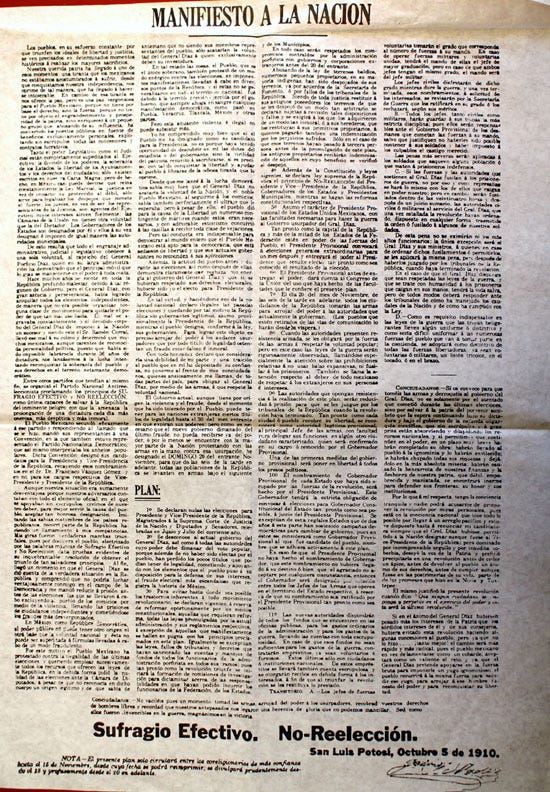
People on the street would talk about manifestos and debate their key points, even come up with rival versions of them and petition neighbourhood committees to include these in updated versions… In fact, this kind of direct democratic back-and-forth was an essential part of the whole movement-building process for many initially clandestine leftist organisations.
Unfortunately, it feels like a lot of this has been lost to online echo chambers and endless debates about ‘correct’ language and whether ‘exercise is violent’ or whatever that latest laughable left-twitter debacle was all about (thanks to Scarlet for the tip-off).
There’s a reason that academic writing is famed for being unreadable, jargon-filled rubbish - so it’s no wonder the academia-ization of activism has been a massive turn-off for so many of the normal people a movement needs to get on its side in order to win. So when we bring back the manifesto, we also need to bring back the straight-talking and, to use a right-wing talking point that’s deeply bad-faith and insincere but nonetheless works in this context, drop the fucking virtue signalling.
Any manifesto worth its salt must outlining a strategy for taking power.
After all, what’s the point of a good manifesto if you never get to implement it?
The conspiratorial right seem to have thought a lot about all of this, and thought about some of it rather laterally, too: hence the sneaky conservative takeover of the supreme court in the US, or Farage’s takeover of the Tory Party in the UK. etc. And it used to be a key part of left strategising too – and a source of endless factional friction.
But any discussion of what such an initial victory would look like, outside of winning an election, is entirely absent from mainstream leftist discourse at the moment. Is an election victory the only way to take control of a country’s destiny? Shouldn’t we at least talk about the other options? What happened to the general strike? Or armed revolution? Or military coups? And what does power even mean, anyway? Is it the top layer of a political party? The means of production? Cultural hegemony? Or…?
It’s clear that too much debate over the above could easily become yet another excuse for inaction on the left. But history also shows us that without more than just abstract ideas on what power really looks like and how to take it, the vaguest ends can end up justifying the worst possible means: eg. to usher in ‘full communism’ a century from now we’ll do some authoritarian state capitalism now, and then the secret police take over, I’ll see you in the gulag, and bang, we’ve all been cancelled - but, like, for real.
I would also argue that history clearly shows that genuine leftist movements can never successfully take and hold power without playing outside the established rules of the political game. Which is where a conspiratorial, long durée strategy becomes attractive again.
What if, instead of publishing every last brainfart on Twitter for it to be minutely dissected, critiqued and/or applauded by an army of earnest wannabe grad students, leftists could start organising themselves for action behind the scenes, deciding on secret strategies for the effective infiltration of public institutions, or even just agree to some fucking message discipline when it comes to what we profess to care about?
What if leftists could move both inside and outside the world of political parties, respectable newspapers and corporate lobbies in order to maximise their influence on society? After all, it’s also what the fascists have always done and what they’re doing rather successfully now, and we need to move with the times or find ourselves that a lack of physical freedom follows swiftly on from a lack of influence.
Which brings me to my final point: that any strategy is ultimately only as good as its tactics.
Abstract thought about what’s ‘right’ isn’t enough. We must take the actual state of play into account and think about a) what’s right and possible now? and b) what’s right and impossible now but could be possible in ten years if we set things into motion correctly?
In terms of ‘correct motion,’ well, for a start we need to find ways of moving with, rather than against, the current realities of late capitalism and the spectacular society in which we live, marked as it is by rampant consumerism, the attention/outrage economy, weapons of mass distraction, manufactured consent via a client media and elite control of our algorithms. We can’t change the dominance of 24-hour rolling TV news cycles and TikTok trends – so how do we make them work for us? If the far-right can do it, why can’t the far-left?
On which note: we also need to do more to make sure that we include our enemies within our own equations. Enough of preaching to the choir and internal competitions over intellectual purity: we need to consider what the far-right wants now and in the future, and how they’ll likely act in the present to achieve their long-term goals, including by subverting our actions for their own benefit.
If ‘progressives’ had thought more about this fifteen years ago, maybe they would have paused a minute on the ‘cancellation’ now embraced by right-wing billionaires, and the whole pathetic discourse of ‘emotional safety’ that has been so effectively weaponised by genocidal zionism, as the excellent Jack Mirkinson points out below…

Protest will, I’m sure, always be among the tactics that leftists need to employ in the face of right-wing domination. But protests that disrupt the lives of ‘normal people’ aren’t exactly popular, and can all too easily be used by a hostile media to make movements like Extinction Rebellion look out of touch.
I should also mention that XR’s non-violent approach is inspired by a famous but entirely flawed political science paper that falsely argued non-violent movements have been more successful than violent ones, based on the gross mischaracterisation all sorts of sometimes-violent movements as entirely peaceful ones.
The actual, real-life historical evidence actually shows that the softly-softly approach alone rarely cuts it when a movement is faced with powerful enemies with no such objections to a nice bit of violence. Indeed, recent events suggest that while protests are not necessarily as powerful as left-wing movements have often assumed, assassinating the leaders of evil corporations a la Luigi… well… I’m saying nothing.
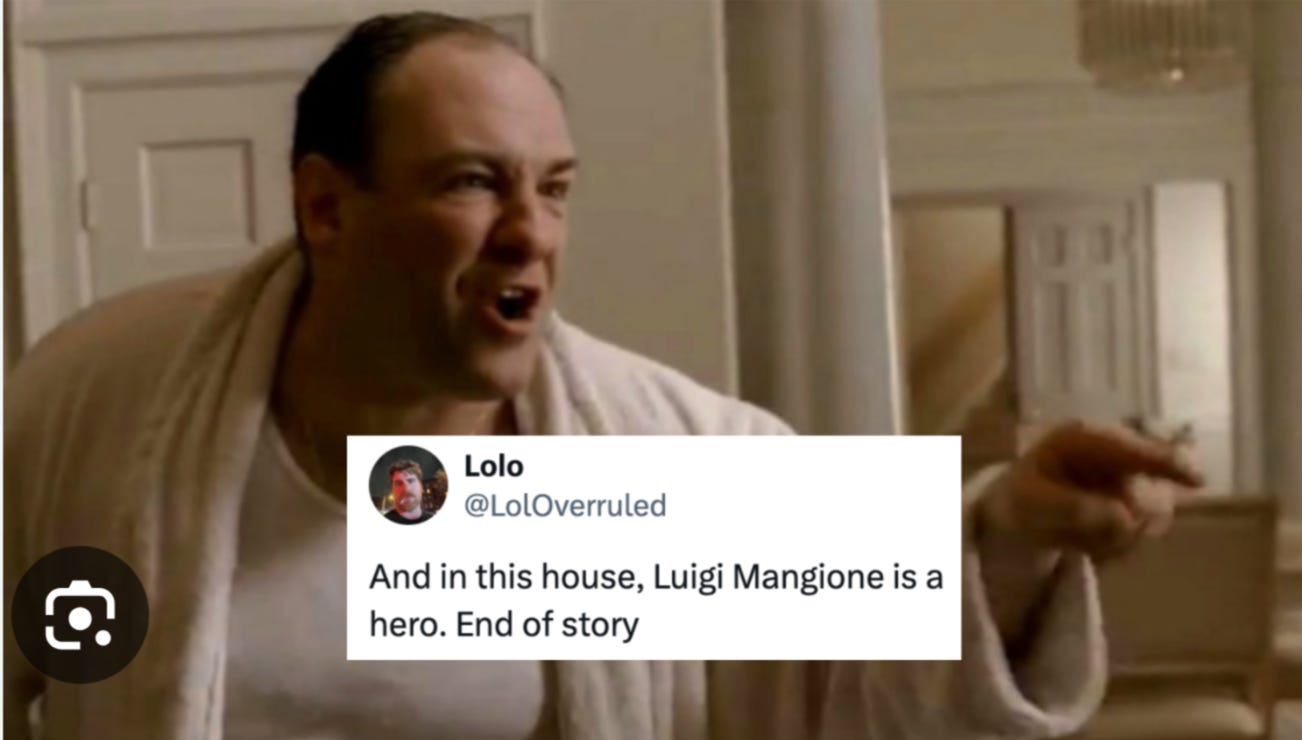
So, while we all agree that murder is probably a bit extreme, what about a bit of light destruction of private property belonging to the 0.0% percent? Grounding some private jets? Drone strikes on oligarchs’ palaces? Such actions might help to draw people’s attention to the extreme disconnect between themselves and elites and blow the lid on society’s latent anger at extreme wealth disparities as everyone’s bills keep going up. Or what about learning from French farmers and squirting silage on town halls and stock exchanges - might ‘the people’ get down with a bit of dirty protest if the targets were well chosen and the messaging coherent?
And… Well, to be honest, this is all I’ve got for the moment.
In sum: the world needs more left-wing plotting involving small groups of conspirators in possession of cash, an ideology, a manifesto, a strategy for taking power and some tactics to help them on the way there.
But clearly there’s plenty more thinking to be done on all of these points. This is just the start of a conversation, rather than the end; I mean, it’s not even that, it’s a random Substack post designed to help with my own thought process, rather than one of those manifestos I’ve been banging on about above.
So… what do YOU think?
If you made it all the way down here, then 1) thanks for reading! and 2) please consider leaving some of your thoughts in the comments. I’d love to hear if you agree with all – or any – of these points, and what your own ideas might be when it comes to organising for action now with a mind to creating real change in the future.
Likewise, if you can, please share with anyone who you think might be interested and let’s keep the conversation going!
Guy Debord, Comments on the Society of the Spectacle, p.74